
Electric Strike vs Magnetic Lock: Which Is Better for Your Building?
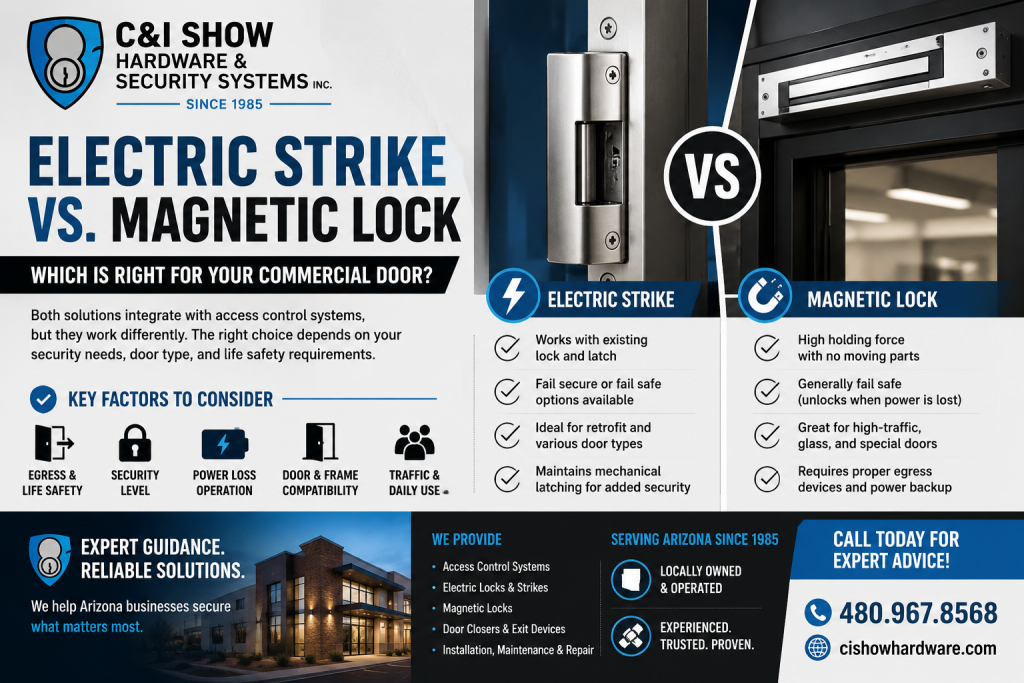
Electric strikes and magnetic locks can both connect a commercial door to an access control system, but they secure the opening in different ways. The right choice depends on the door, existing lock, egress requirements, fire alarm operation, power loss response, traffic, and required security.
How an Electric Strike Works
An electric strike replaces the mechanical strike in the frame. The door still uses a latch from a cylindrical lock, mortise lock, or compatible exit device. When the system grants access, the strike keeper releases so the latch can pass through.
Depending on the selected hardware and function, an electric strike may be fail secure or fail safe. Fail secure generally means the outside remains locked during power loss while code compliant mechanical egress remains available from inside.
Electric strikes are used on many hollow metal, aluminium, and wood openings, but the frame preparation and lock compatibility must be checked.
How a Magnetic Lock Works
A magnetic lock uses an electromagnet mounted at the frame and an armature plate attached to the door. Power creates the holding force that keeps the door secured. When power is removed, the magnet releases.
Magnetic locks are generally fail safe because they need power to remain locked. They can provide strong holding force and may suit openings where a conventional latch and strike arrangement is impractical.
The opening may need request to exit devices, door position monitoring, emergency release controls, fire alarm interface, signage, and backup power depending on the design and applicable code.
Compare Power Loss and Emergency Operation
Power loss behaviour is one of the most important differences. A typical fail secure electric strike can keep the outside secure when power fails, while mechanical hardware still allows egress from inside. A magnetic lock releases when power is removed.
That does not make one approach universally safer. Life safety, occupancy, door location, fire protection systems, and local code determine what the opening must do. Some electric strikes are fail safe, and specialised magnetic locking arrangements have different requirements.
Current model codes place specific conditions on electrically locked egress doors, including hardware operation, power interruption, emergency release, and product listing.
Consider the Existing Door and Frame
An electric strike can be a practical retrofit when the door already has a compatible lock and the frame can accept the preparation. The latch, strike, closer, hinges, and door alignment must all work correctly.
A magnetic lock is surface mounted and may avoid cutting a narrow frame, but it adds visible hardware at the top of the opening. Glass doors, gates, pairs of doors, and unusual frames may favour one solution or require another electrified lock type.
Think About Security and Daily Use
Electric strikes retain a mechanical latch. This can make the door feel familiar and provide positive latching when it closes. The strike must be matched to the lock and expected traffic.
Magnetic locks have no latch to engage, but full holding force depends on correct contact between the magnet and armature. Dirt, movement, poor mounting, or door misalignment can reduce performance.
Both systems need the correct power supply, wiring, controller, credential reader, and maintenance plan.
Review Egress Before Choosing Hardware
A secure opening must still allow people to leave as required. Panic hardware, request to exit devices, sensors, push buttons, fire alarm release, and emergency controls cannot be added as an afterthought.
Codes vary by occupancy and application. Fire rated openings also require listed components compatible with the assembly. A qualified provider should coordinate the door, lock, access control, power, and life safety functions.
Plan Commercial Access Control With C&I Show
C&I Show Hardware and Security Systems installs commercial access control, electric locking hardware, door closers, exit devices, automatic operators, and complete door assemblies throughout Arizona. Call 480.967.8568 to compare an electric strike, magnetic lock, or another electrified solution for your building. The team can review the opening, required egress, power loss response, traffic, and long term service needs before equipment is ordered.
Live References
C&I Show Hardware: Commercial Integrated Security
https://cishowhardware.com/commercial-integrated-security-tempe.htm
C&I Show Hardware: Commercial Doors and Hardware
https://cishowhardware.com/arizona-commercial-doors-hardware.htm
Allegion: Door Hardware 101
Allegion: Fail Safe vs Fail Secure
Allegion: Electromagnetic Locks
https://us.allegion.com/en/products/categories/electromagnetic-locks.html
International Code Council: 2024 International Building Code, Means of Egress
https://codes.iccsafe.org/content/IBC2024V2.0/chapter-10-means-of-egress