Why Won’t My Commercial Door Latch?
A commercial door that closes but does not latch is more than an annoyance. Staff may pull it shut without noticing that the latch never entered the strike. A fire rated opening may also fail to perform as intended when it cannot close and latch without help.
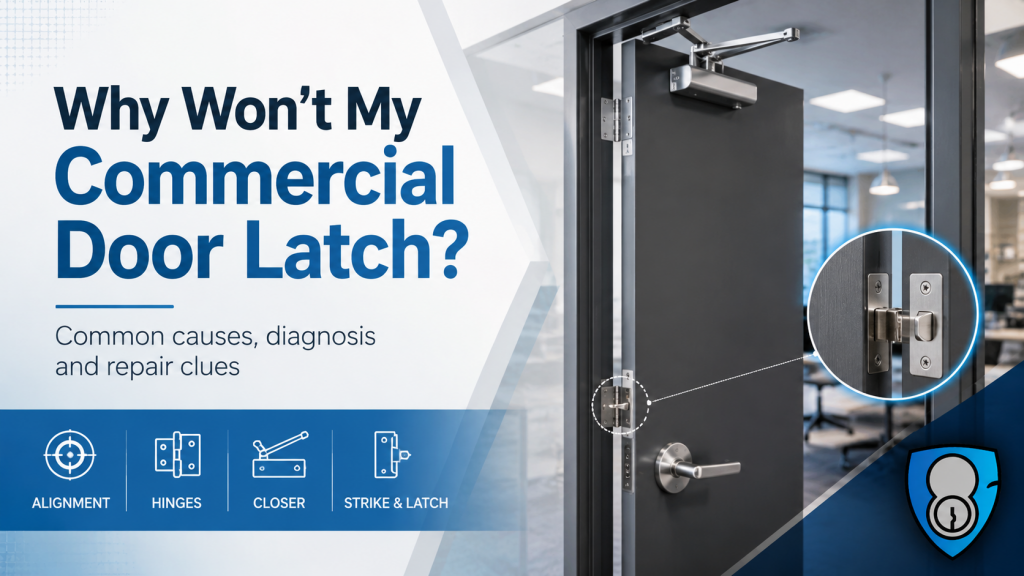
The cause is not always the lock. Hinges, the closer, strike alignment, frame movement, weather seals, air pressure, and access control hardware all affect the last few inches of travel.
Check Where the Latch Meets the Strike
Close the door slowly and watch the latch as it reaches the frame. Scratches around the strike often show whether the latch is arriving too high, too low, or too far to one side.
A small alignment problem may begin with loose fasteners. A larger shift can indicate worn hinges, a sagging door, a bent frame, or building movement. Enlarging the strike opening may hide the symptom without correcting the reason the door moved.
Inspect the Hinges and Door Position
Open the door and look for loose screws, worn hinge knuckles, metal dust, cracked welds, or movement between the hinge and frame. Heavy commercial doors place substantial demand on their hinges when a closer is fitted.
A sagging door often leaves uneven gaps around the frame. The top may rub while the latch drops below the strike. Tightening suitable fasteners may help when the hardware is still sound, but worn hinges should be replaced with products suited to the door weight, use, and fire rating.
Watch the Door Closer Through the Full Cycle
The closer must control the door from the open position and still provide enough final movement for the latch to engage. LCN describes latch speed as the closing phase during the last few degrees of travel. Incorrect adjustment, a leaking closer, a loose arm, or a binding door can prevent that final movement.
Do not turn adjustment valves at random. Closing speed, latch speed, backcheck, delayed action, and spring power perform different jobs.
Oil around the closer body is a warning that the unit may be failing. A replacement must suit the door, mounting position, traffic level, and opening conditions.
Consider Weather Seals and Building Pressure
New seals can hold the door away from the frame until they settle or are adjusted. Damaged thresholds and rubbing sweeps can create resistance near the floor.
Air pressure also matters. A heating or cooling imbalance may make an exterior or stairwell door difficult to close. Increasing closer force may not solve the pressure problem and can make the door harder to open.
Note whether the problem changes when nearby doors open, exhaust fans run, or the building system changes mode.
Check Access Control Hardware
An electric strike must align with the latch and release correctly when access is granted. A loose strike, incorrect keeper position, wiring problem, or door position change can cause intermittent latching.
Panic hardware, electrified locks, door position switches, and automatic operators can also affect the opening. Test the door in normal, unlocked, alarm, and power loss conditions under the approved facility procedure.
Do not disconnect safety or egress components merely to make the door appear to work.
Treat Fire Doors as Complete Assemblies
Fire door inspections include confirmation that the door closes and latches without manual assistance. Hinges, closer, latch, frame, seals, glazing, and other listed components work together as one assembly.
Unapproved drilling, grinding, hardware substitution, or field modification can affect compliance. When a fire rated door will not latch, use qualified commercial door personnel who understand the opening and applicable requirements.
Repair Commercial Doors With C&I Show
C&I Show Hardware and Security Systems has supplied, installed, and serviced commercial doors, locks, closers, exit devices, access control, and related hardware in Arizona since 1985. Call 480.967.8568 to arrange an inspection in the Phoenix or Tempe area. The team can find the cause of a door that will not latch and recommend a repair that restores security, safe operation, and dependable daily use.
Live References
C&I Show Hardware: Commercial Doors and Hardware
https://cishowhardware.com/arizona-commercial-doors-hardware.htm
C&I Show Hardware: LCN Door Closers
https://cishowhardware.com/lcn.htm
C&I Show Hardware: Fire Rated Door Inspection Information
https://cishowhardware.com/how-often-do-fire-rated-doors-need-replacing/
Allegion: LCN Door Closers
Allegion: Basics of Door Closers